South Padre Island Personal Watercraft: A Beginner’s Guide
Published September 3, 2026
If you’re planning a trip to South Padre Island, you may search for “Jet Ski rental” before thinking about what riding one involves. Then you arrive at the water, throttle in hand, and realize you still have questions. What’s the difference between a Jet Ski and a Sea-Doo? Are the bay waters suitable for a first-timer? What does Texas law require before you ride?
Those questions can make a first ride feel more complicated than necessary. South Padre Island’s sheltered bay waters can be a good setting for first-time personal watercraft riders, but conditions can change. Knowing what to expect makes the experience more comfortable. Here’s what to know about PWCs, the major brands, beginner-friendly features, safety, and Texas requirements before you get on the water.
What is a Personal Watercraft?
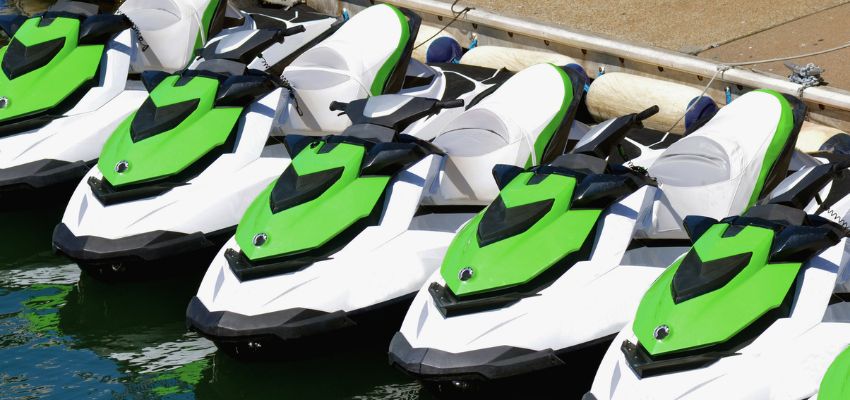
A personal watercraft is a small, motorized vessel powered by a water-jet propulsion system rather than an exposed propeller. Unlike a conventional boat, riders sit or stand on top of the hull, closer to the water and more exposed to spray, wind, and movement.
The propulsion system draws water in through an intake at the bottom of the hull, pressurizes it, and forces it out through a steerable nozzle at the rear. Turning the handlebars redirects the jet stream and changes the craft’s direction.
Because PWCs use jet propulsion rather than an exposed propeller, they have different operating characteristics from propeller-driven boats. They require sufficient water depth for the intake and must be operated according to the manufacturer’s guidance and local restrictions.
Riders typically use them for cruising, exploring coastlines and bay areas, or towing riders on tubes or wakeboards where permitted.
Is a Jet Ski the Same as a Personal Watercraft?
Not exactly, although the terms are often used interchangeably. Personal watercraft, or PWC, is the general category. Jet Ski is Kawasaki’s brand name for its PWC line. Sea-Doo is BRP’s (Bombardier Recreational Products) brand, while WaveRunner is Yamaha’s.
All three are personal watercraft, but individual models differ in areas such as engine design, hull shape, features, and handling. In everyday conversation and many consumer searches, “Jet Ski” is often used as a general term for a PWC, so you’ll see both terms used throughout this guide.
Why Ride a Personal Watercraft in South Padre Island?
South Padre Island sits on a barrier island along the southern Texas Gulf Coast, with the Laguna Madre Bay and the Gulf of Mexico on both sides. The sheltered bay environment can offer conditions that are more approachable for first-time riders than open Gulf water. Local waterways include open bay areas with visible shorelines and channel markers.
Conditions can change throughout the day. Wind may increase in the afternoon, and storms can develop quickly during warmer months. Checking the forecast and current conditions before heading out is worthwhile. Our seasonal guide to riding South Padre Island Jet Skis covers how riding conditions can vary throughout the year.
For visitors, a personal watercraft offers a way to experience the coastal environment from the water rather than from shore. You don’t need to own a boat to enjoy a PWC experience during your trip, which makes renting a practical option for visitors who want to spend some time on the water.
Types of Personal Watercraft
Not all personal watercraft are built the same. Understanding the main categories can help explain why some are better suited to first-time riders than others.
Recreational PWCs
Recreational models are designed for general cruising and recreational riding. Their wider hulls can provide greater stability, while sit-down seating and moderate power make them a practical choice for riders who are still getting comfortable with a PWC.
Rec-Lite PWCs
Rec-lite models are lighter and more stripped down than many full-size recreational PWCs. Their smaller size can make them responsive and easy to maneuver, although they may feel less stable in rougher water. In calmer conditions, they can be a suitable option for recreational riding.
Performance PWCs
Performance PWCs prioritize speed, acceleration, and more aggressive handling. Those characteristics can appeal to experienced riders, but quicker throttle response and more performance-oriented handling can make them less forgiving while you’re learning.
Stand-Up PWCs
Stand-up PWCs are different from the sit-down models most people encounter at rental operations. Riders stand and actively balance the craft while operating it, which requires more practice with body positioning and weight distribution. That steeper learning curve generally makes stand-up models less suitable for beginners.
Are Personal Watercraft Good for Beginners?
Yes. Many recreational PWCs are designed with stability and predictable handling that can make them manageable for first-time riders. That doesn’t eliminate the need for instruction or practice.
Stability
Hull design and width have a major effect on how stable a PWC feels. Wider recreational hulls generally provide a more stable platform than narrower, performance-oriented designs.
Seating
Sit-down PWCs are generally easier for beginners than stand-up models because the rider does not have to maintain balance while standing. The seated position also makes it easier to focus on steering and throttle control.
Controls
Throttle and steering work together: the throttle controls propulsion, while steering relies on jet thrust. Releasing the throttle during a turn reduces steering response, which is why new riders should become comfortable with the controls before increasing speed.
Braking and Reverse
Braking and reverse functions vary between models. Some PWCs use reverse thrust as part of their braking or maneuvering system, while others operate differently. Before riding, make sure you understand how the specific PWC’s throttle, steering, braking, and reverse controls work.
Reboarding
Knowing how to get back onto the PWC is an important part of being prepared. Riders should understand how to use the boarding step and approach the craft safely if they end up in the water.
What to Know Before Riding a Personal Watercraft
Before heading out, riders should:
- Check weather and water conditions.
- Wear a properly fitted personal flotation device (PFD) approved for PWC use.
- Learn the basic controls, including throttle, steering, and start/stop.
- Understand how braking and reverse work on the specific model.
- Attach the engine cutoff lanyard to yourself, your clothing, or your PFD when required.
- Know how to reboard the craft.
- Keep a safe distance from other watercraft, swimmers, and fixed objects.
- Follow posted speed limits and no-wake zone restrictions.
- Listen to the operator’s safety briefing before departure.
PWCs respond quickly to rider input, which can surprise someone operating one for the first time. Starting at a controlled speed gives you an opportunity to get comfortable with steering, throttle response, and the watercraft’s handling before riding faster. Our Jet Ski safety tips for first-time riders cover the basics step by step.
Personal Watercraft Rules in Texas
Texas regulates personal watercraft under its boating laws, with additional requirements that apply to PWC operation. According to the Texas Parks and Wildlife Department (TPWD):
- Boater education. Anyone born on or after September 1, 1993, must complete a TPWD-approved boater education course to operate a PWC, unless operating under the applicable supervision exception. A person who has not completed the required education may operate under the supervision of someone who is at least 18, can lawfully operate the PWC, and is onboard. Operators subject to the education requirement must carry proof of completion and photo ID.
- Age requirements. A person must be at least 13 years old to operate a PWC independently. Riders under 13 may operate a PWC only when accompanied onboard by a qualified adult who is at least 18 and can lawfully operate the vessel.
- Personal flotation device (PFD) requirements. Every person on a PWC, including anyone being towed, must wear a U.S. Coast Guard-approved PFD designed for PWC use. Inflatable PFDs are not approved for PWC use.
- Engine cutoff requirements. If the PWC is equipped with a cutoff or kill switch, the operator must attach it to themselves or their clothing while the PWC is underway.
- Operating restrictions. PWCs may not be operated between sunset and sunrise. Within 50 feet of another PWC, motorboat, vessel, platform, person, object, or shore, they must be operated only at headway speed without creating a swell or wake.
Texas’s minimum operating requirements and a rental company’s eligibility requirements are not necessarily the same. Renters must still meet applicable Texas boater-education requirements.
Because boating regulations can change, verify current Texas requirements directly with TPWD before riding.
Can You Rent a Personal Watercraft in South Padre Island?
Yes. Personal watercraft rentals are available on South Padre Island, giving visitors a way to ride without owning or transporting a PWC. First-time renters can generally expect to arrive before their scheduled departure, check in, and complete a safety orientation before getting on the water.
Rental operators typically provide the PWC and required safety equipment, including a PFD. However, a company’s rental requirements can be stricter than Texas’s minimum operating requirements. For SPI Excursions, drivers born on or after September 1, 1993, must be at least 21 and provide valid photo ID and a Texas Boater Safety Certificate number. Drivers born before that date must provide valid photo ID.
Check the current rental requirements before booking, particularly during busy travel periods.
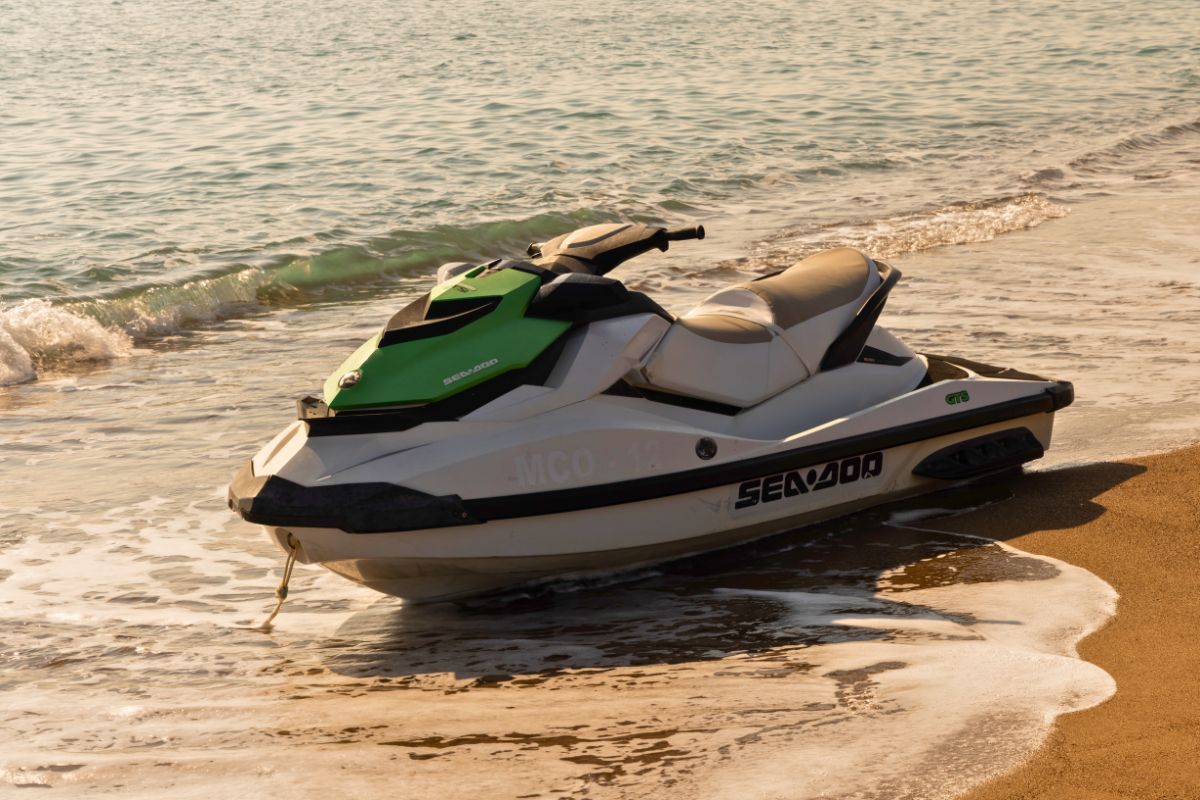
SPI Excursions offers a Sea-Doo rental in South Padre Island for a 45-minute self-guided ride, as well as a longer guided option for more time on the water.
What to Expect From a Sea-Doo Experience
A Sea-Doo experience with SPI Excursions starts with check-in, where riders show a valid photo ID, followed by a safety briefing covering the PWC and its operation. SPI Excursions also instructs customers to watch a Sea-Doo safety video before the experience.
Each rider is fitted with a PFD and receives an overview of the Sea-Doo’s throttle, steering, and cutoff lanyard before heading out. Each Sea-Doo accommodates one driver and one passenger, subject to the company’s weight restrictions.
The current weight limits are 250 pounds for a single rider and 350 pounds combined for a driver and passenger. Customers may be weighed at check-in.
SPI Excursions offers a 45-minute self-guided rental and a 90-minute guided Sea-Doo experience that highlights local history and landmarks along the way. Both options end with a return to the dock at the scheduled time.
Frequently Asked Questions
Do you need a license to ride a jet ski in Texas?
Texas does not issue a separate “Jet Ski license.” However, anyone born on or after September 1, 1993, must complete a TPWD-approved boater education course to operate a PWC, unless the applicable supervision exception applies. Operators subject to the education requirement must carry proof of completion and photo ID.
How old do you have to be to operate a personal watercraft in Texas?
In Texas, a person must be at least 13 years old to operate a PWC independently. Riders under 13 may operate one only with a qualified adult who is at least 18 and onboard supervising. Rental companies can impose stricter age requirements; for example, SPI Excursions requires drivers born on or after September 1, 1993, to be at least 21.
Can two people ride a personal watercraft?
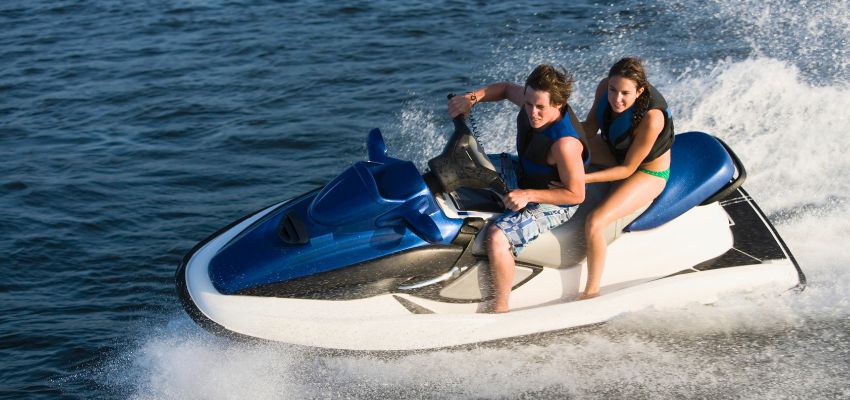
Many recreational PWCs can accommodate a driver and passenger, but capacity and weight limits depend on the specific model and rental operator. SPI Excursions’ Sea-Doos accommodate one driver and one passenger, subject to its weight restrictions.
What is the best time to ride a jet ski in South Padre Island?
Mornings can offer calmer conditions and lighter winds, but there’s no universally best time to ride. Conditions vary by season and can change during the day, so check the forecast and current water conditions before heading out.
Ready to Try a Personal Watercraft in South Padre Island?
You don’t need to own a personal watercraft to get out on the water. SPI Excursions offers a 45-minute self-guided Sea-Doo rental and a 90-minute guided experience in South Padre Island, with a safety briefing before riders head out.
Explore Sea-Doo Rentals or Book a Sea-Doo Experience to see the current options, and visit SPI Excursions for more South Padre Island activities and guides.
Experience the Thrill of Adventure on South Padre Island!
South Padre Island is a haven for thrill-seekers, nature lovers, and anyone looking to make the most of a coastal getaway. At SPI Excursions, we’re committed to making your South Padre Island getaway unforgettable. Whether you’re soaring high above the water while parasailing, feeling the thrill of a jet ski ride, or simply soaking in the beauty of the island, we offer experiences tailored to your sense of adventure. Book with us today and discover why SPI Excursions is your ultimate destination for fun, excitement, and lasting memories.

This Content Has Been Reviewed For Factual Accuracy
The information presented here has been meticulously checked by our internal experts. To learn more about our rigorous editorial process, you can click here.

About The Author
I’m Corinne Grace, a dedicated writer for SPI Excursions. I craft engaging articles to help you make the most of your South Padre Island adventure. With a deep passion for water sports and exploration, I aim to provide you with accurate and exciting information about parasailing, jet ski rentals, and unforgettable experiences on the water.